
You know what terrifies most people about buying kratom?
It’s not the price. It’s not even the legality.
It’s the fear of getting garbage.
Look, you can spend your hard-earned money on what looks like premium kratom, only to discover it’s contaminated, mislabeled, or worse—completely ineffective. That’s not just frustrating. It’s dangerous.
Here’s the truth: The kratom market is flooded with vendors who don’t care about quality. They’ll slap a fancy label on subpar powder and charge premium prices.
But finding the best kratom vendors doesn’t have to be a gamble. You just need to know what to look for.
The Real Problem With Buying Kratom Online
Imagine this scenario:
You order kratom from a vendor with great reviews. The package arrives. You try it. Nothing happens.
Or worse, you feel sick.
This happens more than you think. According to recent industry reports, nearly 40% of kratom products tested contain contaminants or don’t match their labeled alkaloid content.
That’s a coin flip with your health.
The problem isn’t kratom itself. It’s the lack of regulation and the explosion of vendors who cut corners to maximize profit.
So how do you separate the legitimate suppliers from the scammers?
What Makes a Kratom Vendor Actually Trustworthy
Not all vendors are created equal.
The best kratom brands share specific characteristics that set them apart. If a vendor doesn’t check these boxes, walk away.
Third-Party Lab Testing (Non-Negotiable)
Here’s the deal: If a vendor doesn’t provide third-party lab results, they’re hiding something.
Quality vendors test every batch for:
- Heavy metals (lead, mercury, arsenic)
- Microbial contamination (salmonella, E. coli)
- Alkaloid content (mitragynine and 7-hydroxymitragynine levels)
These lab reports should be recent, detailed, and accessible on their website. Not some vague “we test our products” claim. Actual PDF reports with batch numbers.
Transparent Sourcing Information
Where does their kratom come from?
The best kratom comes from Southeast Asia—specifically Indonesia, Malaysia, and Thailand. But that’s not enough information.
Top vendors will tell you:
- The specific region where the kratom was harvested
- The farming practices used
- How long the leaves were dried
- When the batch was imported
If a vendor can’t answer these questions, they probably don’t know themselves.
Clear Product Descriptions and Strain Information
Ever notice how some vendors describe their strains with vague marketing fluff?
“Premium super ultra mega kratom for energy and relaxation!”
That tells you nothing.
Quality vendors provide specific information:
- Vein color (red, green, white)
- Strain origin (Maeng Da, Bali, Borneo)
- Alkaloid profile (actual percentages)
- Recommended serving sizes
This level of detail shows they actually understand their product.
How to Evaluate Kratom Quality Before You Buy
You can’t taste kratom before purchasing online. But you can look for quality indicators.
Check the Color and Consistency
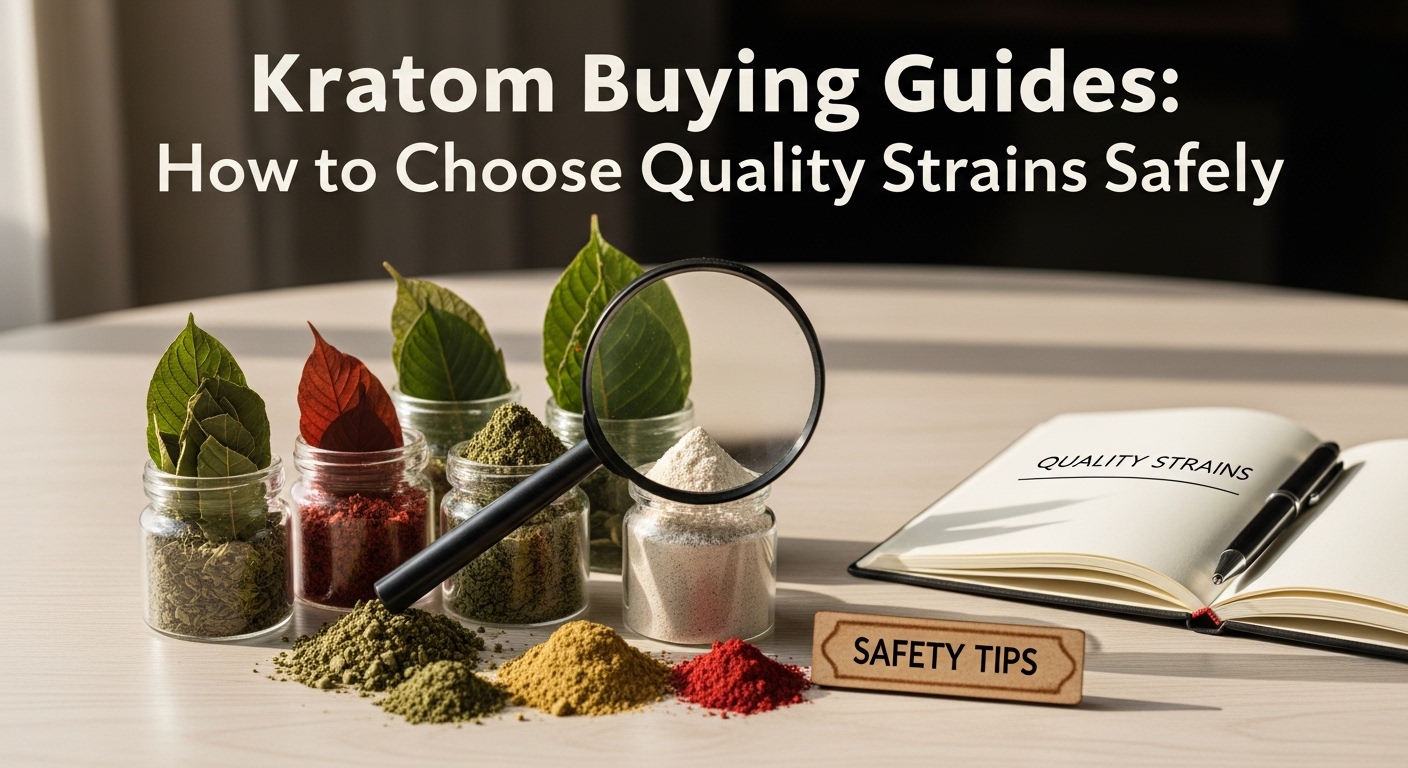
Fresh, quality kratom powder should have a vibrant color:
- Red vein: Deep reddish-brown
- Green vein: Bright olive green
- White vein: Light sage green
If the powder looks dull, grayish, or has an uneven texture, it’s either old or poorly processed.
Smell Matters More Than You Think
High-quality kratom has a distinct earthy, slightly bitter smell. It shouldn’t smell moldy, musty, or like chemicals.
If a vendor offers samples, take advantage. The smell will tell you a lot about freshness.
Packaging Standards
Professional vendors use:
- Sealed, airtight bags (not flimsy plastic)
- Batch numbers and expiration dates
- Clear labeling with strain name and weight
- Child-resistant packaging (shows they care about safety)
Poor packaging means poor quality control.
Understanding Kratom Strains and What You Actually Need
The kratom market loves to overcomplicate strains.
You’ll see dozens of exotic names. But here’s what actually matters:
The Three Main Categories
Red Vein Kratom
- Most mature leaves
- Higher 7-hydroxymitragynine content
- Generally more sedating
- Popular for evening use
Green Vein Kratom
- Mid-maturity leaves
- Balanced alkaloid profile
- Moderate effects
- Good for daytime use
White Vein Kratom
- Youngest leaves
- Higher mitragynine content
- More stimulating
- Popular for morning use
Everything else is marketing.
Don’t Fall for “Proprietary Blends”
Some vendors create “special blends” with mysterious ingredients.
Unless they fully disclose what’s in the blend with exact percentages, avoid it.
You should know exactly what you’re consuming.
Safety Considerations You Can’t Ignore
Quality isn’t just about effects. It’s about safety.
Contamination Risks
Poor-quality kratom can contain:
- Heavy metals from polluted soil
- Pesticides from irresponsible farming
- Bacteria from unsanitary processing
- Mold from improper storage
This is why third-party testing is non-negotiable.
Adulteration Problems
Some unethical vendors spike their kratom with:
- Synthetic opioids
- Research chemicals
- Other botanicals
This is rare, but it happens. Lab testing catches this.
Proper Storage After Purchase
Even quality kratom degrades if stored poorly.
Store in:
- Airtight containers
- Cool, dark places
- Away from moisture
- Labeled with batch numbers and dates
Proper storage maintains alkaloid potency for 1-3 years.
Questions to Ask Before Making Your First Purchase
Don’t be shy about contacting vendors directly.
Ask these questions:
-
“Can you provide the most recent lab test for this batch?”
They should send it immediately.
-
“Where exactly was this kratom sourced?”
Vague answers are red flags.
-
“What’s your return policy if I’m not satisfied?”
Good vendors have clear policies.
-
“How long has this batch been in stock?”
Fresh is better. Anything over 6 months is questionable.
-
“Do you follow GMP (Good Manufacturing Practices)?”
This shows commitment to quality standards.
Their responses tell you everything.
The Bottom Line on Choosing Quality Kratom
Look, buying kratom doesn’t have to be complicated.
You just need to be smart about it.
Prioritize vendors who:
- Provide transparent third-party testing
- Source responsibly from reputable farms
- Offer detailed product information
- Stand behind their quality with guarantees
- Communicate honestly and professionally
Skip vendors who:
- Make medical claims
- Hide their sourcing
- Offer suspiciously low prices
- Pressure you to buy
- Can’t provide lab results
Your health isn’t worth saving a few dollars on questionable kratom.
Start small. Test thoroughly. Build relationships with vendors who earn your trust through consistent quality.
The best kratom vendors aren’t necessarily the biggest or the cheapest. They’re the ones who treat quality as non-negotiable and transparency as standard practice.
That’s how you choose quality strains safely.
Frequently Asked Questions
What should I look for in kratom lab test results?
Lab results should show testing for heavy metals (lead, arsenic, mercury), microbial contaminants (salmonella, E. coli), and alkaloid content. The report should include specific batch numbers, testing dates within the last few months, and come from an accredited third-party laboratory. Avoid vendors who only provide generic certificates or can’t produce recent test results.
How much should quality kratom cost per kilogram?
Quality kratom typically ranges from $80 to $150 per kilogram, depending on the strain and vendor. Prices significantly below this range often indicate poor quality, contamination risks, or adulterated products. Extremely high prices don’t guarantee better quality—focus on lab testing and vendor transparency rather than price alone.
Is it safe to buy kratom from international vendors?
Buying from international vendors carries additional risks including customs seizure, longer shipping times, and difficulty verifying quality standards. Domestic vendors who import from Southeast Asia but operate locally often provide better customer service, faster shipping, and easier verification of their business legitimacy and testing practices.
How can I tell if kratom has gone bad?
Expired or degraded kratom shows several signs: dull or grayish color instead of vibrant green or red, musty or moldy smell, clumpy texture indicating moisture exposure, and significantly reduced effects. Properly stored kratom maintains potency for 1-3 years, but exposure to light, heat, or moisture accelerates degradation.
Should I trust kratom vendors on social media platforms?
Social media vendors often lack the infrastructure for proper quality control and testing. While some are legitimate, many disappear after taking payments or sell untested products. Prioritize vendors with established websites, verifiable business information, accessible customer reviews on third-party platforms, and documented lab testing rather than social media-only operations.